 EGP
EGP
The best desk height for your body
Why desk ergonomics make or break your workday
The anatomy of a healthy workspace
Standard off-the-shelf desks typically measure 29 to 30 inches (74–76 cm), but this one-size-fits-all approach ignores human diversity. When your desk is misaligned with your body, you unconsciously adopt compensatory postures—shrugging shoulders at an oversized desk or slouching at one that's too low. Finding the correct height maintains spinal alignment and keeps your musculoskeletal system in its neutral zone, minimizing physical strain.
Sitting vs. standing: the need for dynamic movement
Static positions create long-term health risks. Adjustable standing desks address this by enabling postural variety throughout your day. However, they only deliver benefits when properly calibrated for both sitting and standing positions, ensuring consistent spinal support regardless of your working position.
Step-by-step guide: how to find your ideal desk height
Step 1: measure for your sitting height
Sit in your office chair with feet flat on the floor
Adjust the chair until your knees bend at 90 degrees with thighs parallel to the ground
Relax your shoulders and bend elbows at 90 degrees, keeping arms close to your sides
Measure from floor to the underside of your elbows—this is your ideal sitting desk height
Step 2: measure for your standing height
Stand upright in shoes you'll wear while working
Bend elbows at 90 degrees with relaxed shoulders
Measure from floor to the underside of your elbows for your ideal standing desk height
Step 3: customize your perfect desk
Most retail desks fail to accommodate shorter or taller individuals. An interactive 3D configurator lets you customize tabletop dimensions, select sustainable wood types, and program your exact sitting and standing heights, enabling seamless transitions between ergonomic positions.
Summary
Investing time to determine your ideal desk height benefits long-term health and daily focus. Proper alignment reduces physical fatigue, protects your joints, and enhances productivity. Since everyone's body differs, an adjustable, customized solution provides the best support for your unique proportions.
More from the Journal
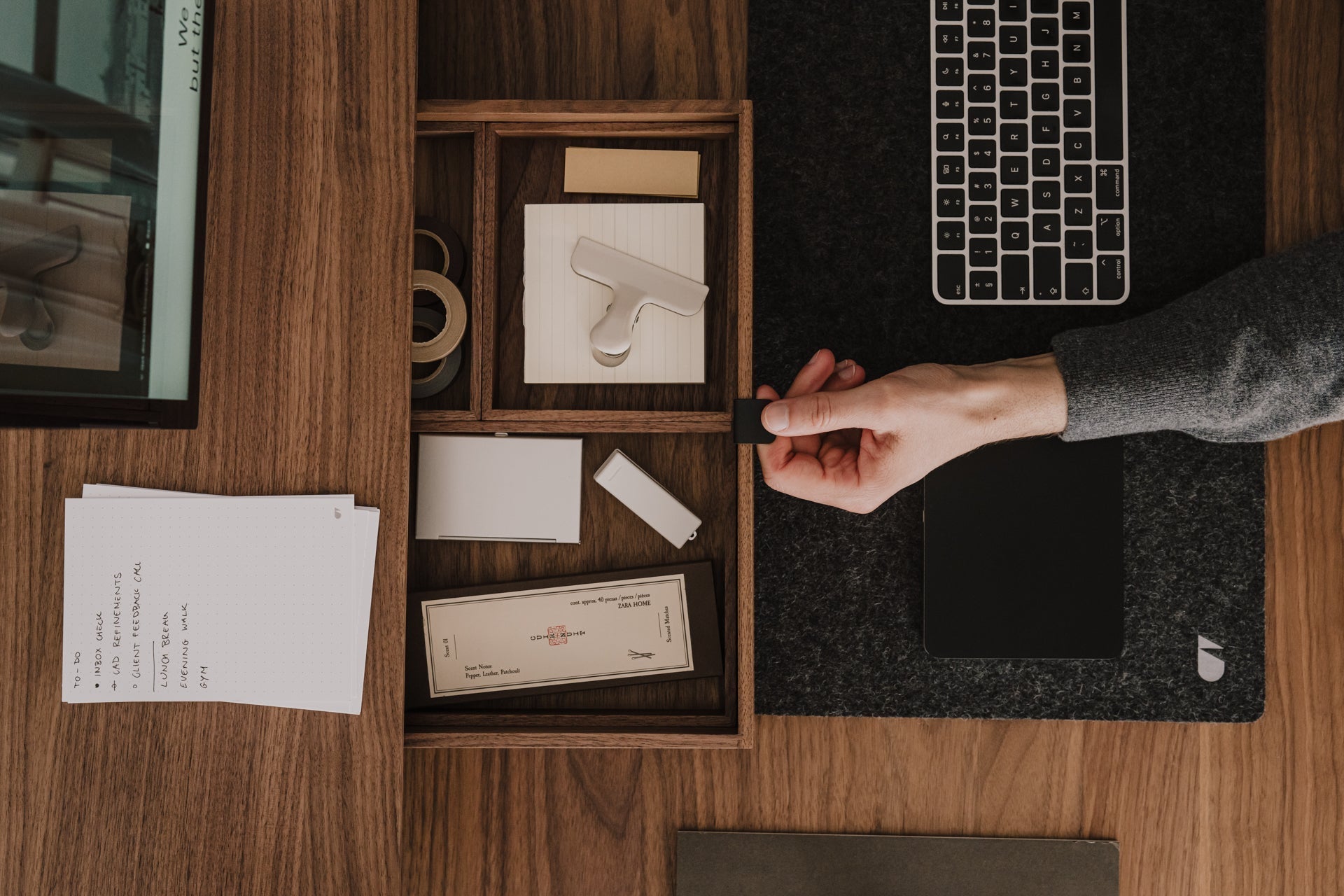
How to organize your desk for productivity using the zones method
Stop losing momentum hunting for your pen. The zones method aligns your desk layout with how you actually work, so everything is where your hand expects it.
March 25, 2026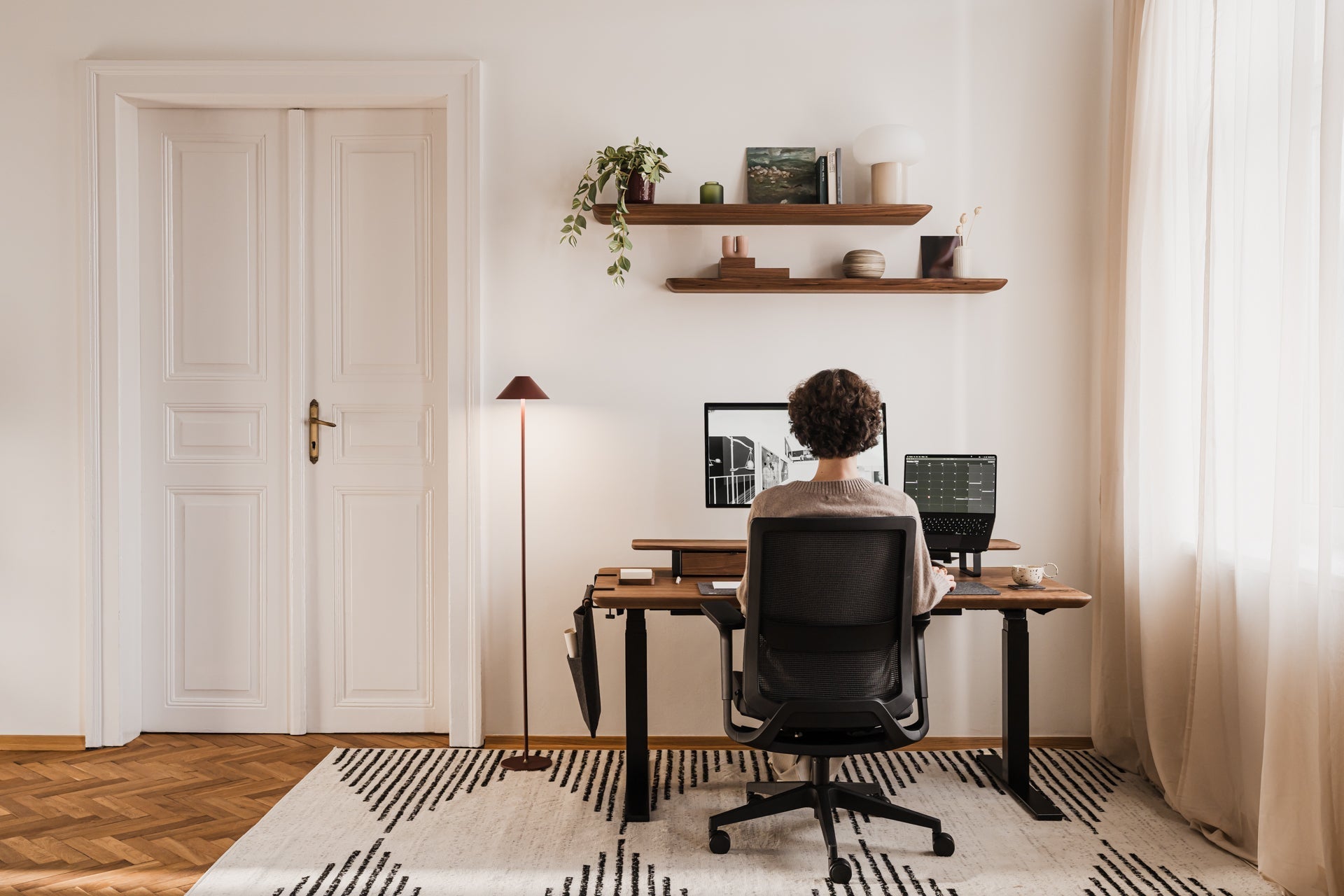
Ergonomic desk step by step: how to set up your monitor, laptop, and keyboard
Even premium furniture won't help if the setup is wrong. A step-by-step guide to positioning your monitor, laptop, keyboard and mouse — with a checklist.
February 5, 2026